
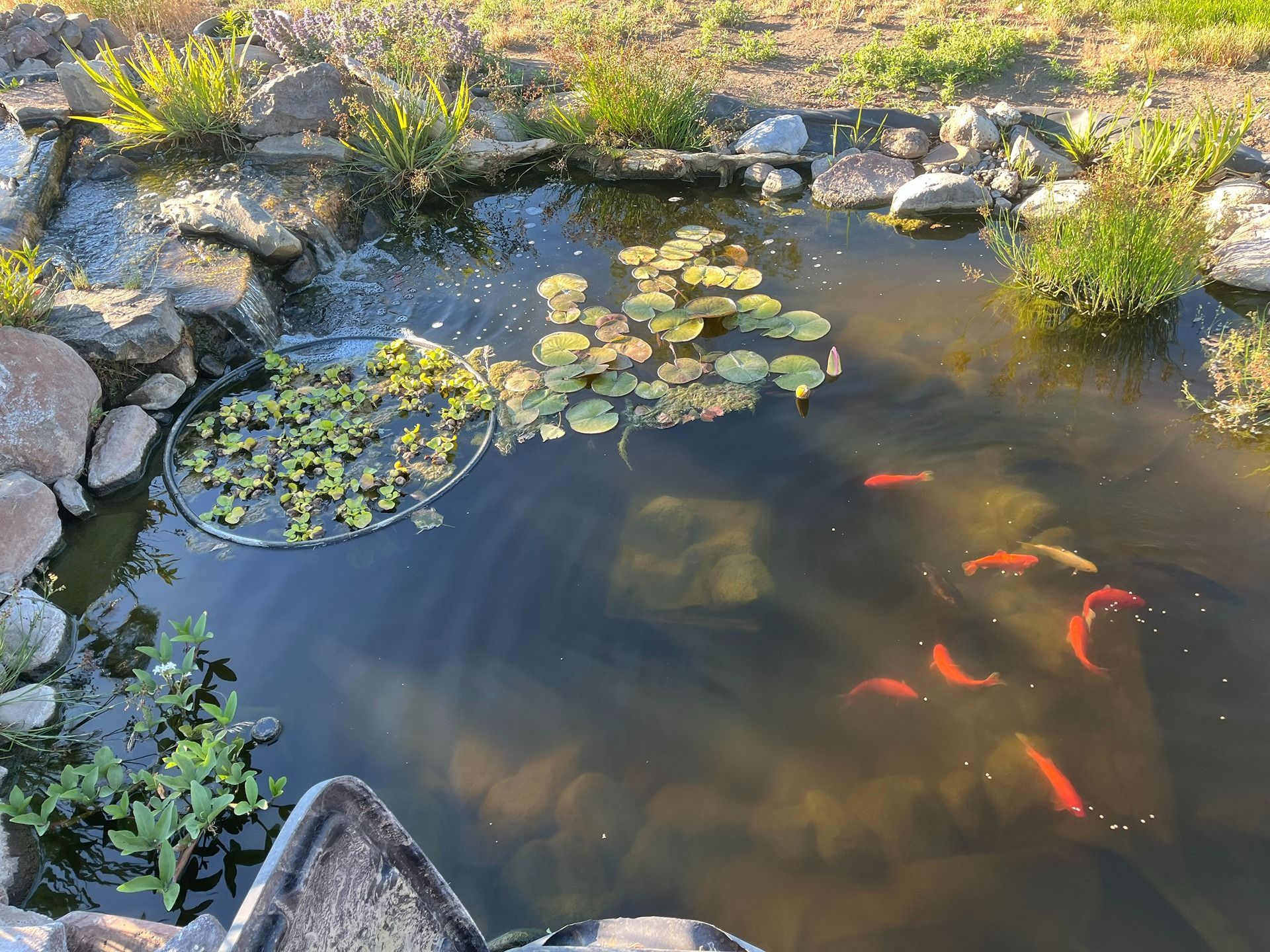
Install a Natural Ecosystem Pond That Lasts
Aquascape Ecosystem Pond Installation in Quincy for properties that need a sustainable, low-maintenance water feature designed to work with nature, not against it.
Busy Beaver Excavation installs Aquascape-style ecosystem ponds for residential properties, estates, and landscapes across Quincy and surrounding areas. These ponds are built using durable rubber liners instead of clay or concrete, creating a flexible, long-lasting structure that holds water reliably in desert soil conditions.
An ecosystem pond is more than a hole filled with water. It is a balanced system where rock, gravel, water, plants, and beneficial bacteria all work together to keep the pond clear and healthy without constant intervention.
Built to Function Like a Natural System
Every pond installation begins with excavation that follows the natural contours of your land while creating a stable basin designed for long-term performance. In Central Washington, where sandy and rocky soils are common, a rubber liner is essential to prevent water loss and ensure consistent water levels.
Instead of relying on compaction or clay content, the system uses:
- A high-quality EPDM rubber liner to prevent seepage
- Underlayment to protect against punctures from rocky soil
- Strategically placed rock and gravel to create a natural look and support filtration
- A biological filtration system that keeps water clear without chemicals
The result is a pond that looks like it belongs in nature while functioning as a self-sustaining ecosystem.
What Makes an Ecosystem Pond Different
Unlike traditional ponds that depend on soil conditions or concrete structures, Aquascape ecosystem ponds are designed to stay clean and balanced naturally.
Water is continuously circulated through a biological filtration system where beneficial bacteria break down debris. Aquatic plants absorb nutrients, helping prevent algae growth, while rocks and gravel provide surface area for natural filtration.
You get:
- Clear water without constant chemical treatment
- Stable edges that won’t erode or collapse
- A flexible liner that adapts to ground movement and freeze-thaw cycles
- A living water feature that supports fish and plant life
Instead of ongoing maintenance issues, the pond becomes a stable, integrated part of your landscape.
Designed for Long-Term Use and Enjoyment
After installation, your ecosystem pond will:
- Maintain water levels even in dry conditions
- Stay visually clear through natural filtration
- Support fish, plants, and wildlife
- Require minimal seasonal maintenance
Each project includes full site planning, excavation, liner installation, and ecosystem setup. While decorative features like waterfalls, fountains, or fish can be added, the pond is fully prepared to support them from day one.
Questions About Pond Installation in Quincy
Homeowners and landowners often ask about what makes a pond hold water in all weather conditions and how long the installation takes once excavation begins.
How do ecosystem ponds stay clean without chemicals?
They use biological filtration, beneficial bacteria, and aquatic plants to naturally break down waste and control algae.
Why use a rubber liner instead of clay or concrete?
Rubber liners prevent leaks in sandy or rocky soils and flex with ground movement, making them far more reliable in Central Washington conditions.
How deep does an ecosystem pond need to be?
Most are built 2–4 feet deep, with deeper zones if fish are included, allowing for temperature stability and protection.
How long does installation take?
Most residential ecosystem ponds are completed within 2–5 days depending on size, access, and design complexity.
What kind of maintenance is required?
Minimal. Occasional debris removal and seasonal checkups are typically all that’s needed, thanks to the self-sustaining ecosystem.
Busy Beaver Excavation combines precise excavation with Aquascape ecosystem design principles to build ponds that work with your land, not against it. Each project is planned with clear timelines and built to perform in the unique soil conditions of Central Washington.