
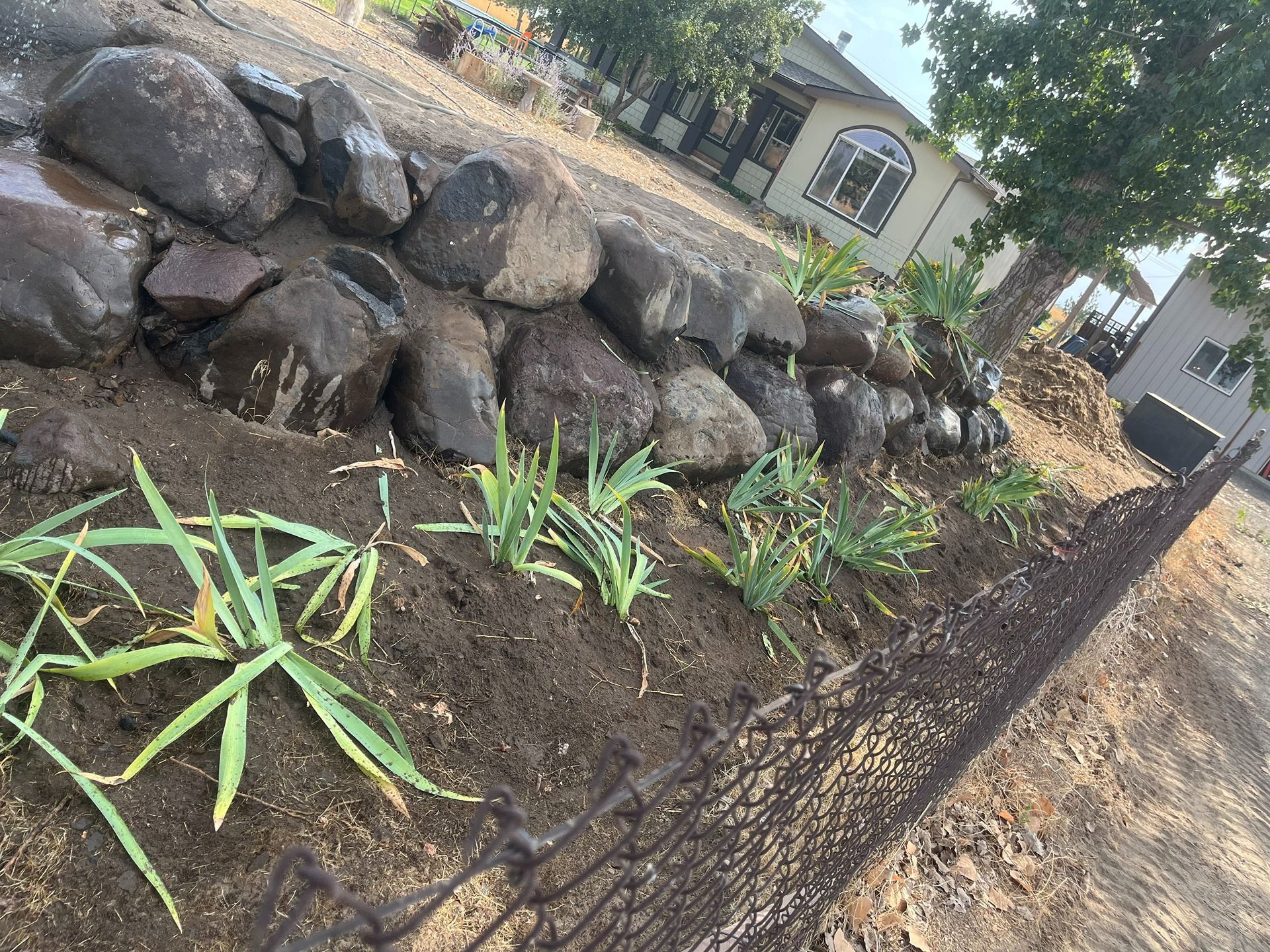
Build Rock Walls That Hold Slopes and Define Boundaries
Rock Walls in Quincy for properties with elevation changes, erosion problems, or sloped lots that need structural support and visual definition
Busy Beaver Excavation builds custom rock walls for residential yards, agricultural properties, and commercial landscapes in Quincy and the surrounding region. You need a wall that holds back soil, controls erosion, and lasts through freeze-thaw cycles without cracking or leaning. The construction starts with proper base preparation and stacking techniques that lock the rock together without relying on mortar alone.
The work includes excavating a trench below grade to establish a stable footing, selecting rock that fits the scale of your wall, and stacking each course with slight backward lean to resist forward pressure from the soil. In Central Washington, you often encounter rocky terrain and sloped lots that require careful grading before the wall can be built. The finished wall integrates with surrounding excavation work so water drains away from the base and the structure does not settle over time.
If you need a rock wall installed on your property, contact Busy Beaver Excavation to review your site and plan construction that addresses elevation changes and erosion control.
What Makes a Rock Wall Stand Up to Weather and Load
You need a footing that extends below the frost line so the wall does not heave in winter, and each rock has to be placed with its longest dimension running back into the slope for maximum stability. Crushed gravel is placed behind the wall to allow drainage, which prevents hydrostatic pressure from building up and pushing the wall forward. The top course is capped with larger stones that lock the structure together and provide a clean finished edge.
After construction, you will see a wall that holds its line without bulging, sheds water away from the base, and ages naturally without losing structural integrity. Busy Beaver Excavation finishes each project with grading that ties the wall into your landscape so it looks intentional rather than added as an afterthought. The slope above the wall remains stable, and the area below is protected from washout during heavy rain or snowmelt.
Each project is planned to complement surrounding excavation and grading work, and walls are built to suit your property boundary, erosion control needs, or visual goals. The work does not include planting or irrigation installation above the wall, but the site is prepared to support those additions once the structure is in place.
Questions About Rock Wall Construction in Quincy
Landowners and homeowners often ask about how tall a wall can be built without additional engineering and what maintenance is required after installation.
How tall can a rock wall be built on a sloped lot?
Walls up to four feet are typically constructed without engineering, but taller walls may require design approval depending on the load and soil type behind the structure.
What type of rock works best for retaining walls?
Basalt and granite are common in Central Washington and provide the weight and durability needed for walls that hold back soil and resist weathering.
When is the best time to build a rock wall?
Spring and fall offer stable ground conditions and moderate temperatures that make it easier to excavate footings and move heavy rock without equipment getting stuck in mud or dust.
How does drainage affect wall stability?
Proper drainage prevents water from saturating the soil behind the wall, which reduces pressure and keeps the structure from leaning or cracking over time.
What happens if the wall settles or shifts after construction?
Minor settling can occur in the first year as the soil behind the wall compacts, but properly built walls should not shift noticeably if the footing and backfill were installed correctly.
Busy Beaver Excavation brings equipment and stacking experience suited to the rocky terrain and sloped properties common across the region, and each wall is built with attention to long-term durability and integration with your land.